
Listen to this guide
A short introduction in audio. Playback starts only when you press play.
Read the complete transcript
A junk journal is a handmade place for the small bits of life: a note, a photo, a ticket, or a piece of paper you might otherwise throw away. It can be a bound book, a folded booklet, or one loose page. The word junk describes reusable scraps, not the worth of your memories. You don't need a perfect layout or special supplies. Choose one small thing you want to remember. Place it on plain paper, add a date, and write one sentence about why you kept it. If a pocket or printable background helps tell that story, add it later. One page is enough to begin.
What goes into one?
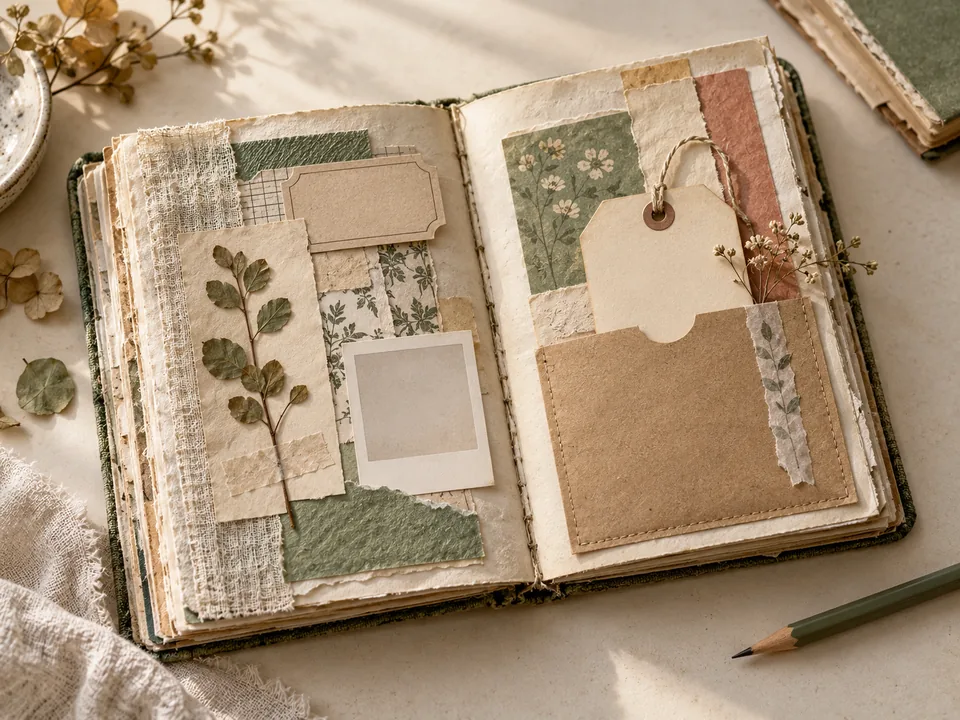
A page might hold a photo, receipt, letter, handwritten note, a leaf sketch, or a piece of packaging. The point is to give those bits a place and a story. “Junk” describes reusable scraps, not the value of what you keep.
Many makers use pockets, tags, and small envelopes. A pocket is simply a paper shape attached on some edges so a note can slide inside. Ephemera means small paper items, such as tickets, labels, and cards, that add context or decoration.
Do you need a whole book?
No. Making one page is a useful way to learn what you enjoy. You can later bind pages with stitching, rings, or a simple folder, or leave them loose. Starting small also helps you work out how much space to leave for writing.
What is it for?
A junk journal can document a trip, a reading memory, a family story, or a perfectly ordinary Tuesday. Some people enjoy arranging color and texture; others use the page mainly to hold words. There is no rule that every inch must be filled.
A sensible first step
Pick one small thing you want to remember. Place it on plain paper, add a date, and write a sentence about why you kept it. Only then decide whether a printable background, card, or pocket helps. This sequence keeps the memory in charge of the decoration.